


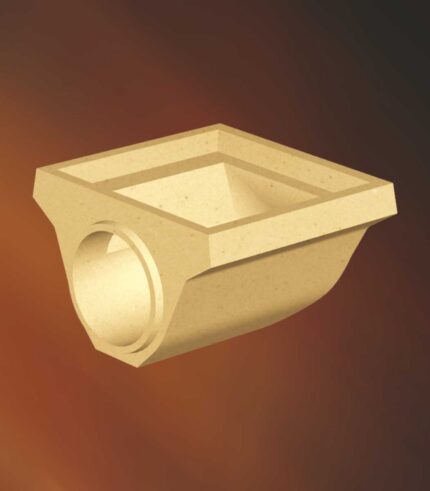
Filter Elbow Bracket
Elbow Filter Support, a refractory component designed to house and support filter elements in systems conveying molten materials, industrial fluids, or high-temperature process flows. Its geometry assists in changing direction and the protected flow of the material, promoting the retention of impurities and inclusions during pouring.
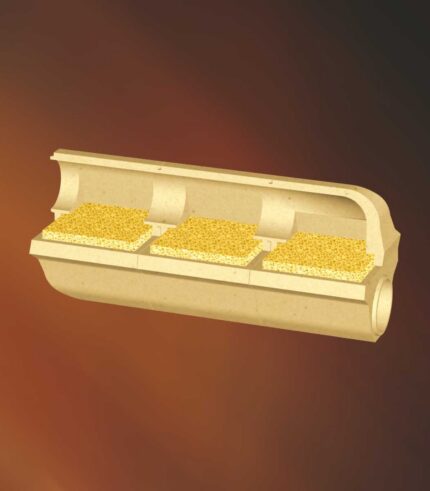
Filter holder
Filter Support, refractory component indicated to accommodate and support ceramic filters in systems for casting and conducting molten materials at high temperatures. It works by promoting protected flow and distribution, helping to retain impurities and inclusions during the industrial process. It is designed to withstand thermal shock, abrasion, corrosion, and mechanical stress in harsh environments.
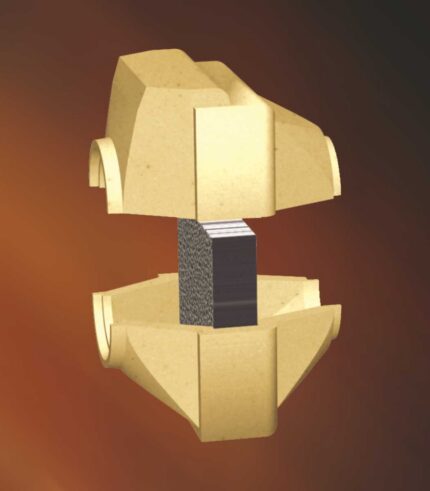
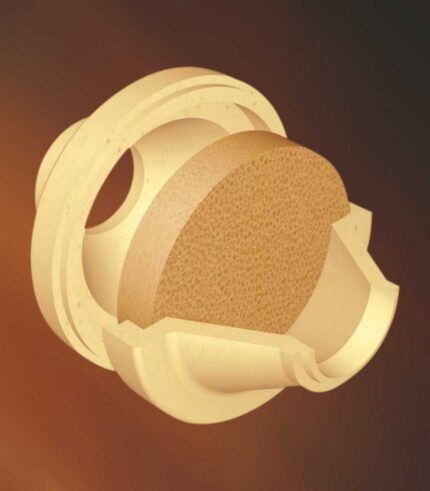
Round filter holder
Filter support, a refractory component designed to house and support ceramic filters in systems for pouring and conveying high-temperature molten materials. It works by promoting protected flow and distribution, helping to retain impurities and inclusions during the industrial process. It is designed to withstand thermal shock, abrasion, corrosion, and mechanical stress in harsh environments.

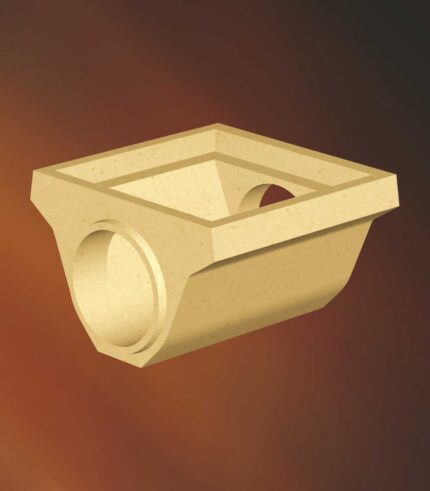
T-support for filter
T-support for filters: a refractory component designed to accommodate and support filter elements in systems for pouring and conveying high-temperature molten materials. Its T-shaped geometry facilitates the passage and distribution of the flow, aiding in the retention of impurities and inclusions during the process.